
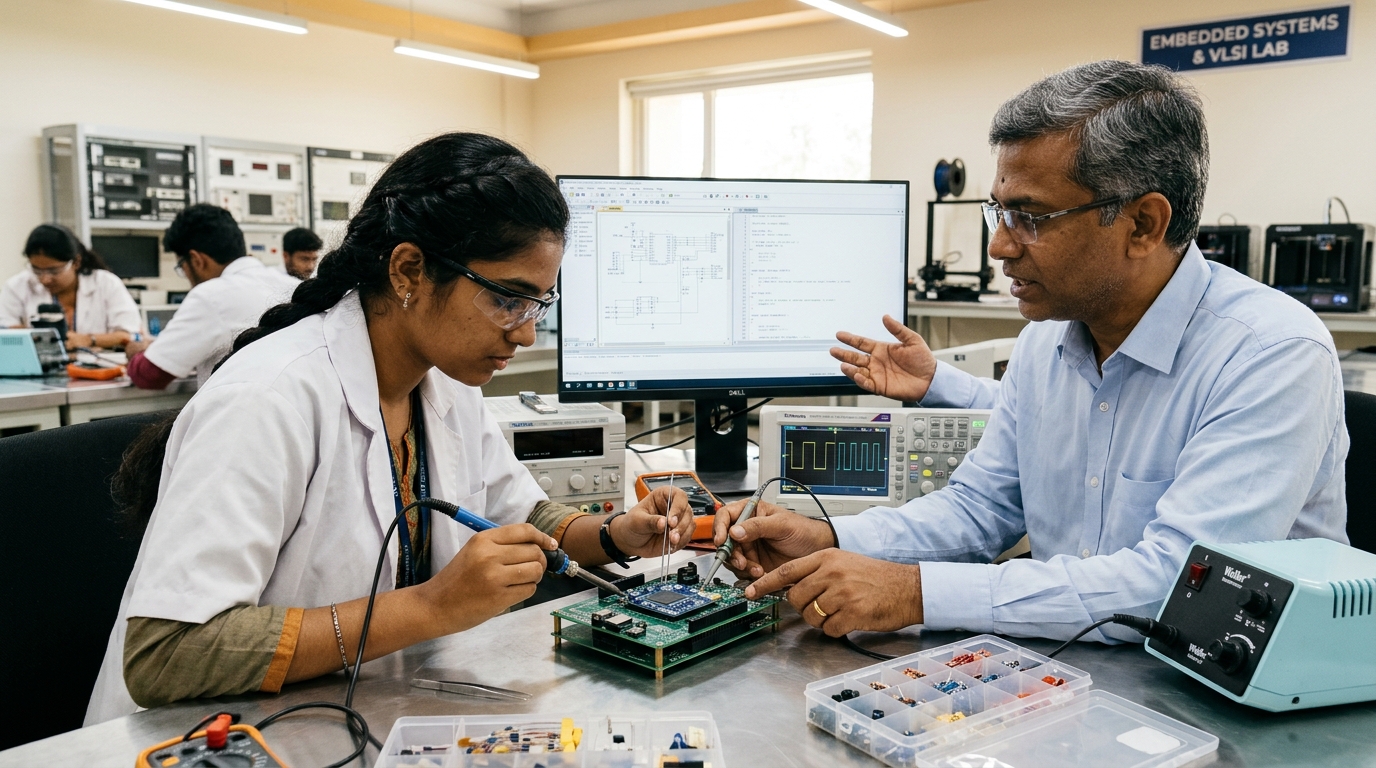
The Global and National Imperative for Hands-On Vocational Training
Across the world, the definition of an educated workforce is undergoing a profound structural transformation. For generations, traditional education systems in developing nations placed overwhelming emphasis on theoretical memorization—rewarding students who could reproduce textbook definitions on examination papers rather than those who could diagnose, build, repair, or operate practical systems.
In the contemporary digital and industrial economy of 2026, this outdated educational paradigm has created a widespread, painful paradox: millions of educated young graduates struggle to secure employment, while industrial, technical, and commercial enterprises struggle daily to find candidates equipped with practical, workplace-ready competencies.
The solution to this global challenge lies in industry-led vocational education—a training model that systematically bridges the gap between academic instruction and actual workplace execution. By aligning educational curricula, lab equipment, and evaluation methods directly with the technical requirements of modern enterprises, vocational training transforms students from passive listeners into skilled, confident practitioners.
This in-depth analysis examines how national and international vocational frameworks, exemplified by industrial leaders like BOSCH in India, illustrate the vital principles that must guide practical computer and technical education in regional centres like Pakur.
Deconstructing Industry-Led Training: A Closer Look at BOSCH Initiatives in India
BOSCH, a global leader in automotive engineering, industrial technology, consumer goods, and energy solutions, has long been recognized as one of the world's foremost pioneers in technical vocational apprenticeships. Originating from the German dual-education tradition, BOSCH's approach integrates classroom theory with continuous, hands-on workshop experience.
In India, BOSCH has actively invested in corporate social responsibility (CSR) and skill-development frameworks to uplift technical education standards across the country. A prominent example of this commitment was documented in Bengaluru, where Bosch established and supported a modern Skill Development Center at the Government Industrial Training Institute (ITI) at Dairy Circle.
This initiative was designed to address specific technical bottlenecks in the vocational education system: - Mechatronics and Automation Labs: Providing students with direct exposure to pneumatic systems, programmable logic controllers (PLCs), sensor technologies, and automated assembly operations. - Modern Information and Communication Technology (ICT) Infrastructure: Equipping classrooms with high-performance computing systems, industrial software suites, and diagnostic equipment. - Trainer Upskilling Programs: Ensuring that faculty members are trained by experienced industry engineers on current industrial safety protocols, workflow methodologies, and emerging technological trends.
While this specific Bengaluru facility operates independently of regional training centres in eastern India, the fundamental lessons it offers are universal: technical education succeeds only when students are provided with the physical tools, machinery, and software required to practice their trade daily.
The Disconnect: Rote Textbook Learning vs Modern Industrial Realities
Why does rote textbook learning fail so comprehensively in technical and computer education? The answer lies in the cognitive nature of practical skills.
Learning to operate computer software or manage industrial hardware is fundamentally analogous to learning to drive a vehicle or play a musical instrument. One can read textbooks on automotive mechanics for years, memorize every internal combustion formula, and pass multiple-choice written exams with top marks; yet, the first time that individual sits in the driver's seat of an automobile in live traffic, their theoretical knowledge offers zero protection against an impending collision. Physical steering, clutch coordination, spatial awareness, and reflexive braking can only be cultivated through continuous, real-world practice behind the wheel.
Similarly, in computer education: - Textbook Learning: Memorizing the definition of a spreadsheet, writing the syntax of a VLOOKUP formula on a piece of paper, or reading about the concept of Goods and Services Tax ledgers. - Practical Lab Execution: Sitting in front of a live workstation, opening Microsoft Excel, importing a raw dataset containing 5,000 corrupt records, writing the nested formula, troubleshooting circular references, formatting the data visually, and printing an executive summary report before a 5:00 PM deadline.
When a student spends their training hours actively executing tasks on a workstation, their brain builds muscle memory, visual familiarity, and problem-solving resilience. When they encounter an unexpected error, they do not panic; they methodically review their steps, test hypotheses, and resolve the obstacle. This is the exact definition of employability.
Why Practical Workstation Time Outperforms Theoretical Lecturing
Decades of educational research have consistently validated the Learning Pyramid model, which measures knowledge retention rates across different instructional methods:
| Instructional Method | Average Knowledge Retention Rate | Typical Application | |---|---|---| | Lecture | 5% | Traditional theoretical classroom lecturing | | Reading | 10% | Reading textbooks and printed study materials | | Audio-Visual | 20% | Watching slideshow presentations or video demos | | Demonstration | 30% | Observing an instructor operate software | | Discussion | 50% | Group conversations and conceptual review | | Practice by Doing | 75% to 80% | Individual hands-on lab workstation practice | | Teaching Others | 90% | Peer mentorship and collaborative lab problem-solving |
The data is unmistakable: passive methods (lectures and reading) result in less than 10% retention after two weeks, while active practice by doing yields up to 80% long-term retention.
This empirical reality explains why CT Training Centre strictly prioritizes lab workstation hours above all else. When a student in Bank Colony spends two hours every day typing, balancing balance sheets in Tally Prime, or styling web pages in HTML/CSS, they are engaging in the most efficient and durable cognitive learning method known to modern educational science.
Core Competencies Demanded by Today’s Employers: From Accounting to ICT
Across modern commercial enterprises in India, recruiters consistently prioritize five practical competencies over academic pedigree:
1. Software Fluidity and Speed Can the candidate navigate enterprise software interfaces rapidly and comfortably using keyboard shortcuts, without hunting and pecking across menus? Punctual task execution is directly correlated with commercial profitability.
2. Data Integrity and Verification In commercial accounting and data administration, accuracy is non-negotiable. A misplaced decimal point or misclassified tax ledger in GST reporting can trigger severe financial penalties for a business. Employers seek candidates who possess the discipline to audit and verify their own work systematically.
3. Adaptability to New Software Tools Technology does not stand still. A worker who is trained solely on a single proprietary interface often falters when an employer upgrades to a newer software version or adopts a cloud-based CRM. High-quality vocational education teaches underlying conceptual logic—how databases work, how files are structured, how user interfaces behave—enabling graduates to master new tools within days.
4. Digital Communication and Collaboration Modern work requires collaborative file sharing, cloud document synchronization, professional email correspondence, and clear digital presentations. Candidates must know how to communicate technical findings concisely to colleagues and clients.
5. Basic Technical Troubleshooting When a printer disconnects, an internet gateway drops, or an operating system freezes, does the worker freeze in helplessness, or do they know how to check cable connections, restart background spooler services, and perform basic fault isolation?
How Regional Training Centres Adapt National Standards for Local Aspirations
While national initiatives by conglomerates like BOSCH often focus on major industrial corridors, the challenge and privilege of regional institutes like CT Training Centre in Pakur is translating these rigorous standards to the unique socioeconomic realities of local communities.
In Pakur: - Diverse Academic Backgrounds: Learners arrive with varying levels of prior schooling. Some are first-generation digital learners whose families have never owned a desktop computer. Training centres must provide patient, zero-prerequisite entry points that welcome beginners without intimidation. - Bilingual and Vernacular Support: Complex technological concepts must be explained in accessible, clear language—combining Hindi, Bengali, local dialects, and English terminology—so students fully grasp the conceptual logic before learning the English software commands. - Affordable Fee Structures: World-class lab infrastructure must be made accessible through structured, affordable monthly fee models, ensuring that lack of disposable family wealth does not bar a motivated young person from mastering technical skills. - Local Industry Alignment: Training must directly address the actual commercial opportunities available within the district—local government clerical positions, hospital data management, retail distribution accounting, school computer teaching, and freelance online digital services.
The Socio-Economic Impact of Practical Digital Skills on Rural and Semi-Urban Youth
The true power of vocational computer training is its ability to break intergenerational cycles of economic vulnerability. When a young woman from a farming family in Pakur completes a one-year diploma, masters commercial accounting in Tally Prime, and secures an administrative position at a local office, the impact reverberates far beyond her personal paycheck:
- Immediate Household Financial Stability: An entry-level clerical or accounting salary provides steady, predictable monthly income that protects families against agricultural volatility and medical emergencies.
- Elevated Social Standing and Autonomy: Technical competence fosters profound self-reliance, giving young people—particularly young women—a respected voice in family decision-making and community life.
- Inspirational Ripple Effects: When neighbors and siblings see a local youth succeed through disciplined study at Bank Colony, it demystifies technology and inspires dozens of other families to invest in their children's education.
- Local Economic Productivity: By supplying skilled, reliable computer operators, accountants, and technical assistants to local businesses and government offices, the entire district economy operates more efficiently and transparently.
Summary: Future-Proofing Skills in an Era of Digital Transformation
As India continues its rapid journey toward a trillion-dollar digital economy, the divide between those who can practically operate technology and those who cannot will continue to widen. Theoretical degrees alone can no longer guarantee economic security.
The enduring lesson from industry-led vocational models—from BOSCH's advanced manufacturing apprenticeships to CT Training Centre's daily computer practice in Pakur—is that mastery begins at the workstation. When young learners are provided with modern tools, patient mentorship, and the daily freedom to practice their craft, they do not merely prepare for jobs; they unlock their full human potential and build durable digital futures for themselves, their families, and their communities.